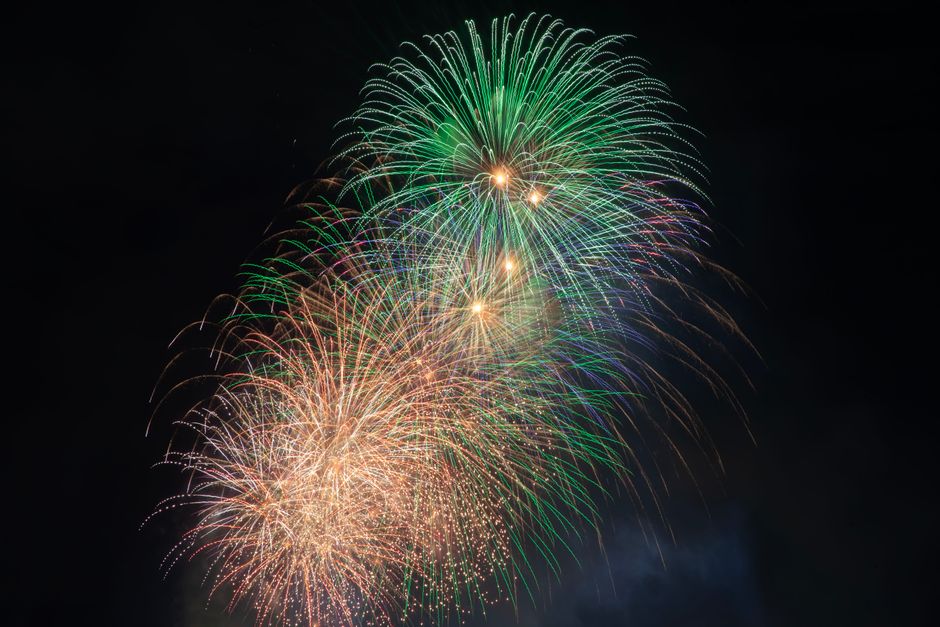
When the sky fills with color on the Fourth of July, you are watching science and history at the same time.
Older Than the Country
Fireworks were invented in ancient China more than a thousand years ago, when people discovered that a certain powder could bang and sparkle. When America celebrated its very first Fourth of July in Philadelphia in 1777, there were already fireworks — one of the country's founders, John Adams, said the day should be marked with "illuminations," which was his fancy word for a light show.
The Colors Are Metals on Fire
Here is the cool part: every color in a firework comes from a different metal burning. Copper makes blue and green. Strontium makes red. Barium makes green. Sodium makes yellow. Sprinkle in a little magnesium and you get a brilliant white. When each one heats up, it glows its own color — so a firework is really a chemistry lesson exploding in the sky.
Watch, Don't Touch
Fireworks are beautiful and also dangerous — even a sparkler is hotter than an oven. So the best job for a kid on the Fourth is the easiest one: find a good spot, look up, and enjoy the show.
Sources: Library of Congress; American Chemical Society.