Most villages come first and get a railroad later. Millerton happened the other way around: the railroad came first, and the village materialized beside it.
The Harlem Line Pushes North
The New York & Harlem Railroad began running in Manhattan in 1832. Over the following two decades it worked its way up through Westchester and the Harlem Valley, and in 1851 its extension from Dover Plains north to Chatham was driven through the farmland of the Town of North East. Among the contractors and builders of that extension was Sidney G. Miller — the man the new trackside settlement would be named for.
The effect was immediate. Farmers who had hauled goods by wagon could now load milk and crops onto cars bound for New York City. Merchants set up beside the depot. A first passenger station went up in 1851; the village's second station, a Shingle-style building, followed in 1911 and still stands near the center of the village.
A Four-Railroad Town
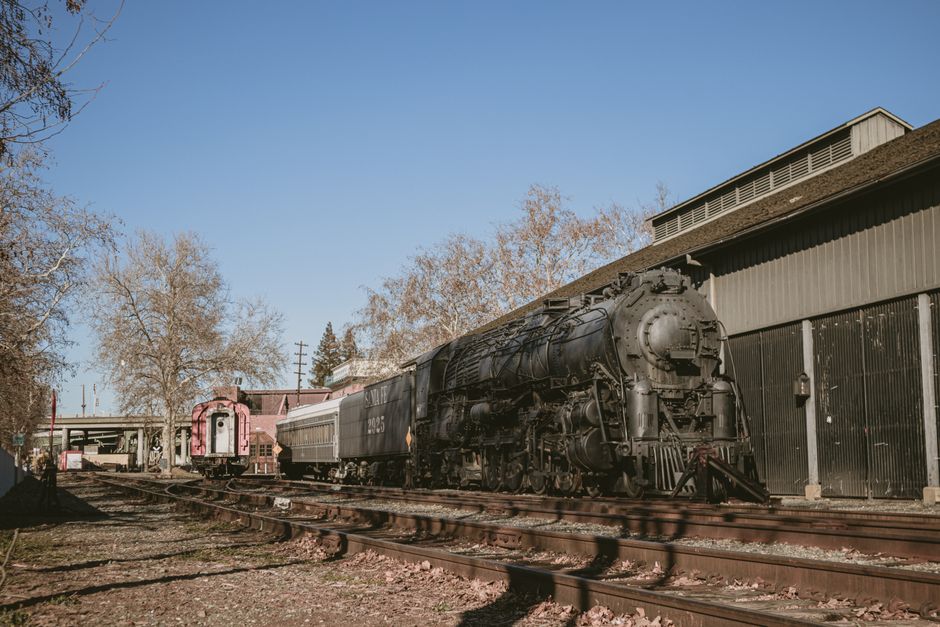
Millerton did not stay a one-railroad town for long. By the early 1880s, the county history recorded that in addition to the Harlem line, the Duchess, Newburg & Connecticut, the Poughkeepsie & Eastern and the Connecticut Western railroads all touched Millerton. A local historian has counted four different railroad systems operating in Millerton between 1851 and 1888, moving coal and freight between the Hudson River and the manufacturing centers of Connecticut.
That junction status made the village the commercial center of the region — hotels for travelers, feed stores and hardware for farmers, and a Main Street that filled out block by block through the second half of the nineteenth century.
The Long Goodbye
The railroad era did not end all at once. The New York Central took over the Harlem line in the 1860s, and it became part of Penn Central in 1968. After Penn Central's bankruptcy, passenger service between Dover Plains and Chatham ended by 1972. Freight hung on longer: the last freight train between Dover Plains and Millerton ran on March 28, 1980, and the line was abandoned days later.
But the story has a second act. The rail bed that built Millerton was reborn as the Harlem Valley Rail Trail, which now carries walkers and cyclists along the same route the trains once traveled — a story we tell elsewhere in this series.
When Millerton's 175th anniversary committee designed a logo for the 2026 celebration, they chose a train motif, calling the railroad the foundation of the Village of Millerton. It is hard to argue. No train, no town.
Sources: Smith's History of Duchess County, New York (1882); Wikipedia (Harlem Line; Harlem Valley Rail Trail); Townscape Millerton walking tour; The Millerton News.