Ask what built Millerton and most people will say the railroad. But the railroad had a partner: iron.
A Company Town in Miniature
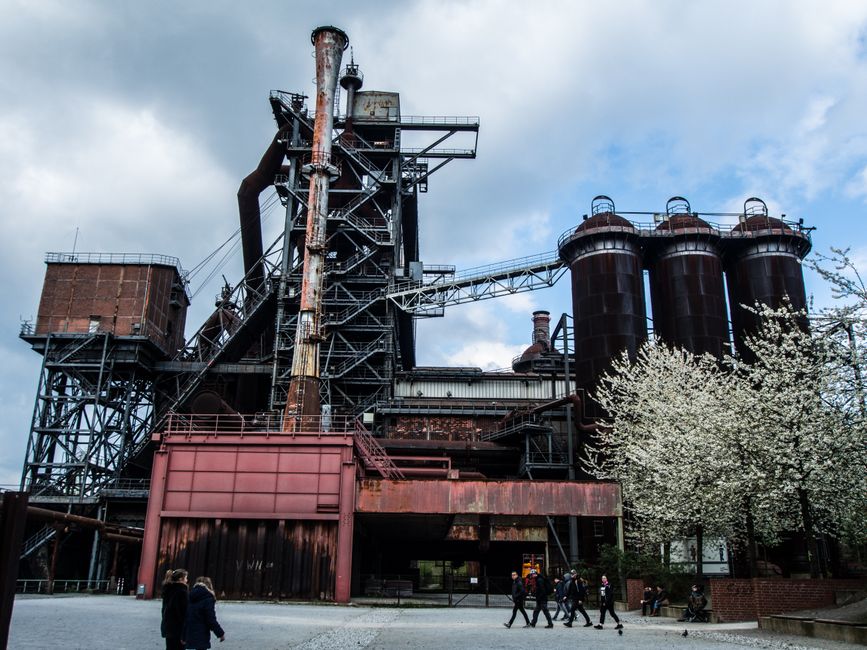
Just outside the village lies Irondale, a spot on the map that was once one of the busiest industrial sites in eastern Dutchess County. The buildings of the Millerton Iron Company were erected there in 1854 or 1855 by Julius Benedict, who later sold the works to Barnum & Richardson, the Connecticut iron powerhouse whose president, William Barnum, headed the company in its heyday.
The furnace's specialty tells you everything about the era: car-wheel pig iron. The ore, dug from the immediate vicinity, was — in the words of the 1882 county history — "peculiarly adapted to the making of car wheels." The iron that came out of Irondale went into the wheels of the very railroad cars that were knitting the country together, some of them likely rolling right past the furnace on the Harlem line.
By 1882 the works employed about one hundred and fifty hands, making it one of the area's largest employers. Irondale was a small world of its own: the company ran a general store, and the hamlet had its own post office, established in the mid-1870s. The company also controlled the local grist mill, rebuilt in 1880 on a site where James Winchell had built a mill around 1803 — a reminder that industry on that stream was older than the village itself. Village accounts note the works' capacity reached some 12,000 tons a year by 1890. Irondale even had its own cemetery, where Walter Wakeman, at whose farmhouse Millerton was named in 1851, lies buried.
Boom, Then Quiet
Irondale's population, the 1882 history noted, consisted chiefly of those who worked in the mill and furnace — the sole business features of the place. When the eastern iron industry faded around the turn of the century, undercut by the great ore fields and steel mills farther west, hamlets like Irondale faded with it. The furnace went cold, the workers moved on, and Irondale returned to the quiet it knows today.
What Remains
The name survives — on the cemetery, in local histories, and in the memory of a village that owes its first prosperity to fire and ore as much as to steam and steel rails. Today the Harlem Valley Rail Trail passes near the old industrial landscape, and walkers cross ground where furnace smoke once marked the busiest corner of the Town of North East.
As Millerton marks 175 years in 2026, Irondale is worth a moment of the celebration. The village's founders bet on the railroad, but it was iron that helped pay the bet off.
Sources: Smith's History of Duchess County, New York (1882); Village of Millerton history page; Town of North East.